Sunday, 20 November 2022

Leonard Cohen in the Sinai


There are moments across history who define and re-define an era. For the Middle East, Israel and Jews from all over the world, this was the Yom Kippur War in 1973. In less than 20 days, the geographical and especially mental map was rewritten in the sound of the alarm. 

With the usual attention to the finest details, Matti Friedman´s last book explores a relatively less known episode: Leonard Cohen´s presence in Israel during those times. Approaching 40, without a noticeable musical activity in a while, Cohen was languishing for life while in the Greek islands. 

His presence in Israel didn´t change or challenge the already booming musical scene, which allowed him to join for his concerts. But those encounters were testimony of a a new spirit, of a new generation of Israeli, particularly of musicians. 

As usual, Friedman is doing an outstanding research and journalistic investigation, checking on sources, interviewing almost everyone that happened to be around Cohen during his stay. It is an example to follow by everyone looking to investigate a relatively ´niche´ subject.

For everyone interested in the history of Israeli music and especially in Cohen´s life story, Leonard Cohen in the Sinai by Matti Friedman is a valuable resource. I reckon not ready too much - or at all - about musicians and music in general, but this book is at least as captivating as Cohen himself.

Rating: 5 stars

Sunday, 6 November 2022

Book Review: When the Angels Left the Old Country by Sasha Lamb


The good angel and the bad - kind of evil actually - angel decide to leave the Pale of Settlement and relocate to the goldene medina in order to find out Essie, the baker´s daughter. Maybe they also wanted a bit of adventure bored by their chevrute studies in the shtetl. Once on the other side of the pond, they observe how the immigrants are badly treated, and the workers in the factories as well, and redefine their identities - gender, angel-like etc..

I am personally in awe about new Jewish literary voices, inserting in the storytelling flow contemporary topics - like gender fluidity for instance - while maintaining a historical and religious background - the old shtetl, the religious traditions. When the Angels Left the Old Country is following the same pathway in a way which is both evocative and creative and even humorous - the relationships between the two angels is both kind and hilarious.

Although the story unfolds in a pace of old shtetl story, the disparate parts of the story and the events occurring in the States - like the social protest and the Feminist outrage - do not match necessarily the story. Instead, it pushes for a social message without polishing the details. The message(s) take over the story and especially from the middle of it, it´s hard to ignore the discontinuity. 

Personally, I had high expectations from the book, as giving a new impetus to Jewish topics in contemporary literature is an interesting project. Despite of having some interesting twists, it ends up too ideological and such a literary touch is always detrimental to the literary quality.

Rating: 3 stars

Disclaimer: I was offered a print version in exchange for an honest review but the opinions are, as usual, my own

Sunday, 30 October 2022

´The Beautiful Days of My Youth´


Born in Dej, Ana Novac (born Zimra Harsányi) grew up in Oradea (Nagyvárad). In 1944, she shared the fate of the Hungarian Jews, the last to be brought to Auschwitz. She was just a 14-year old girl hence the ironic title of her memoir, originally wroten in French The Beautiful Days of My Youth, which I´ve read in the German translation by the late Eva Moldenhauer. The diary covers her six- month experiences in Auschwitz and Plaszow, a camp in the South of Krakow, and many other small camps in the region. 

Every single memoir and story about Shoah helps to redraw the social and psychological escape of the tragedy. Even if it is mentioning new details about the circumstances and the interactions within the camp, or just shares personal feelings and memories, every single line of a testimony matters. 

Life at 14 means so much for young people. But for a generation of Jews who survived the Shoah - Ana´s parents and brothers didn´t - this formative time was associated with hunger, survival and the cruely of the Kapos. A time that will leave their mind and bodies with trauma for ever.

After being freed, she settled in Bucharest, Romania. In the mid-1960s she moved to Berlin and further on to Paris where she worked in the field of theatre and as an author. 

Her testimonies were not shared with her Hungarian or Romanian audiences and she is hardly known in Romania, although she used to have a relatively active presence in the world of theatre in the 1950s and 1960s - inculding by having one of her plays played on a main stage. Her memoir was published in Romanian only in 2004. The Romanian Secret police - Securitate - followed her - through a mole infiltrating the direct entourage of her then husband, the critic and writer Paul Schuster - and was perfectly informed about her intention to write the memoir. As a Hungarian-Jewish writer and intellectual she was a double target. Her first version of her memoir will be published in Hungarian - as A téboly hétköznapjai - at the end of the 1960s, where she lived for a short time, accompanying her then husband. The memoir was afterwards translated into French by Jean Parvulesco, a Romanian born journalist living in France, as Les Beaux Jours de Ma Jeunesse.

There is more than one generation of Romanians who grew up unaware of the Shoah and how it affected their fellow Jews. Although Novac´s story is related to the Hungarian pro-Nazi government who ruled at the time Transylvania, her testimonies would have raise questions about what happened with the Jews from the Romanian-led territories, which weren´t friendlier towards Jews either. 

The Beautiful Days of My Youth echoes those times and adds more knowledge to the topic, both humanly and historically. Her diary was compared to Anne Frank´s but had a lower literary profile due to the intricacies and anti-semitism of the Cold War politics in Romania.

Tuesday, 25 October 2022

Where We Feel at Home

 ´Die Geschichte meiner Familie scheint wie ein Pendel zu sein, das langsam zurückschwingt´.

Through personal accounts and family stories, writer and journalist Maxim Leo recreated the history of his family, spread all over the world, as they escaped Nazi Germany. Wo wir zu Hause sind is a (auto)biographical account tracing his family members and their longing for the home they lost.

His parents returned to Germany after the war, in the Eastern part of Berlin, in Lichtenberg, dreaming - as many others - of building the communism. Some of his relatives were involved in building the state of Israel. Other made career and fortune in France or London. All stories are unique as sharing particular experiences. In addition to the content of the stories though, the methods used for the research can be used as an inspiration to anyone looking to remake their family tree, Jewish or not. It relates particularly to third or second generation researches, when part of the archives and testimonies were obliterated for physical and age-related reasons.

The book is rich in details about the Jewish life in Germany before and after the war and the longing of many of the German Jews for the home they were expelled from against their own will. 

Monday, 19 September 2022

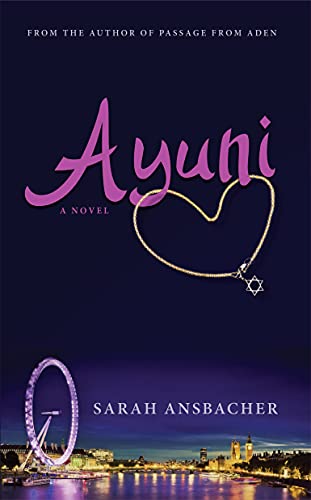
Ayuni by Sarah Ansbacher. An Adeni Love Story between London and Israel


Once upon a time, when I used to travel often to London for various reasons, someone told me a story about how he - with a Chassidish background - ended up on a shidduch with a divorced Yemeni woman and although he was tempted to advance with the match, his family was completely against, although until now he is still single. The reason was mostly the ´different background´ which sometimes easily translated as a nuanced refuse to accept someone of a more ´Mizrahi/Oriental´ in the family. I don´t want to develop too much, but often such reasons do not lack racist considerations and unfortunately, it could operate both ways.

I completely forgot about the story until I started this Shabbes to read a Jewish Romantic novel set in London, about the love between an Adeni boy and a Chassidish girl, Ayuni - a term of endearment in the Yemeni/Adeni dialect - by Sarah Ansbacher. I don´t remember ever to have heard about a Jewish novel featuring Adeni Jews, therefore I was pleased to read also for reasons related to the pure information about this group.

As part of the former British Empire, Yemeni Jews especially those from Aden, used to have strong trade relationship with London therefore  when the antisemitic attacks intensified, the British passport helped some to move to the UK. This was the story of Ben Aharoni, the young male character of the story, the first generation born on the British soil. He fell in love with Miri, an innocent Chassidish girl who just happened once to be the backup story to her best friend Raizy, while she was casually dating Ben´s friend. Although Raizy will eventually return to the usual dating cycle and will end up marrying a heimische boy, Miri will remain with Ben through which a new world opens up to her: movie theatre, TV set, physical contact with men, a relationship burgeoning before marriage.

And although everyone in this story knowns that this love cannot go anywhere, Ben and Miri included, the two keep adding to their story. Until it is too late to turn back, anyway. The diversity of London Jewish life, observant Jewish life, I dare to outline, is unfolding under our eyes through Miri´s innocent discovery of a different perspective, outside the shtetl - probably around Golders Green. The fact that in the end she will relocate to Israel, where it should be place for anyone, no matter the origin, is symbolic.

I was almost sure for half of the story where the story will lead to, but haven´t expected to happen this way and wasn´t prepared for the spectacular twists either. I was definitely pleased with the ending, after running fast through events in the second half. Ansbacher is treating her characters with empathy, trying to understand their motivation rather than accuse, judge and eventually kill their characters.

Ayuni is a diverse and insightful Jewish love story, that besides introducing the discussion about Jewish diversity - as we are all am echad - it also builds up an entertaining story. Although there may be not many Adeni-Chaddisische couples in London and elsewhere, as one of the characters of the book mentioned, ´it´s a different generation´ and hopefully the old stories of prejudice can win against love - for each other and am Yisroel.  

I am so curious about other Adeni stories that I am about to read her other book, this one seems to be fully inspired by stories of Jews originary from Yemen. I can hardly wait to finish my work chores for today and delve into the book.

Rating: 4 stars

Tuesday, 13 September 2022

Discovering Jewish Diversity for Children: Almost a Minyan


Learning as a child, with love about different customs and approaches to the daily practice is an important step towards embracing diversity at the old age. No matter our own personal choices, acknoweldging and further on accepting that other people may have a different understanding of Jewish practice is relevant for building up a healthy realm of tolerance and mutual acceptance.

Almost a Minyan by rhymes by Lori S. Kline, and illustrations by Susan Simon, published almost five years ago by Sociosights Press can guide pre-school and first grades children towards the path of acceptance. 

A girl is watching her father every day leaving the house early in the morning to pray at shul. She is waiting for the moment when she will be counted as part of the minyan - the ten persons required for a praying quorum within the small Jewish community she is living. As her zayde - grandfather in Yiddish - died, she will replace him, by using the tallit and tefillin who belonged to her grandpa. 

Some may not be used with the idea of women wearing a tallit or kippa or tefillin or being counted as part of the minyan. Many may reject it automatically as a corruption of religious practices. Nevertheless, there are women and communities who do practice differently, including by assigning different, more diverse roles to women. Exactly what Almost a Minyan is outlining, especially by the match between old and new traditions. 

A recommended read, including for your long winter Shabbos days, or as an inspired lecture preparing for the next month of chagim.

Rating: 3.5 stars

Sunday, 11 September 2022

An Immodest Story


I am always keen to read memoirs, but also novels, featuring individuals, particularly women, who went OTD - out of the Orthodox Jewish path. With more individuals with a strict religious background having access to education and social media, the number of such work exponentially increased in the last decade. Although some may say that no one shows too much interest in portraying ´normal´ happy Jewish Orthodox families - partly truth as well, but do the happy Jewish Orthodox women do have the time and resources to dedicate to such projects (except some women rather belonging to the ´modern Orthodox´ version like Chabad)?

I am particularly interested in stories focused on the conflict between worlds, about the tension the character who left behind a stable world succeeds - or not - to swim through the challenging waves of the modern lives. Despite the patterns that are common to everyone, there are so many nuances that are part of the individual story of each and every one of us, as human beings.

Immodest is the second book by the Israeli author L.E.Einat - Einat Lifshitz Shem Tov.  She is based in Israel and has a BA in History, with masters in guidance and counseling. 

The book tells the story of Perele, a rebelious girl growing up in a big Orthodox family, married against her will with an aggressive man at a very young age, who will get a divorce against the opposition of her community leaving behind not only the abusive marriage, but her strict practice as well. The story has some interesting characters - her mother for example, able to overcome the limits internalised about marriage and women role by her community and makes a step towards accepting her daughter, as well as her mother-in-law, who ends up testifying by her own will in court against her own violent son, although her husband supported him. Perele herself is a well defined character, although she is missing a lot of details that would have make her more relatable, including her everyday Orthodox practice, besides the modesty rules - like, for instance, the fact that there are no details about her own relationship with religion, the ways in which she fills her day as a Jewish Orthodox woman.

The book also approaches the issue of sexual abuse within family, a vague reminder of the excellent and mindblowing Hush. However, this subplot does not necessarily adds on to the main story, being rather presented as a consequence of the lack of sexual education within the community.

What for me was very difficult to grasp for a long time within the story was: 1. Where exactly the story takes place and 2. What Hasidic group it is all about. 

As in the case of Perele´s own story, there are scarce details regarding the location of the story. For many pages into the book, the surroundings are so neutral that they can be in NYC, Marais or Stanford Hills. We are told somewhere that in fact it is happening in Israel, and I may figure out by myself that it could be Bnei Brak - also as it is close from the beach. 

As for the Hasidic group, the riddle is solved somewhere in the second half, as Perele is starting to share her experience with sexuality and the ways in which ´her group´ dismisses any mixture between genders and considers sexuality as a tool for procreation - and no, not all Hasidic groups think the same. Without being mentioned, it´s clear that we have to do with the very strict and cultish-like habits of the Gur Hasidim that do have an important number of followers in Bnei Brak. 

Another discrepancy for me, but maybe less important anyway, is the cover, which shows a woman that one will rather meet in Gush Etzion that in Bnei Brak where she will be for sure considered very modern. 

However, for anyone who wants to read about a story of survival through love and resilience, Immodest is a catching read. Those who went already to such a dramatic family break-up it´s a reminder of all the wounds that will never heal, but also about the chances that open up, once the walled world was left far behind.

Rating: 3 stars