Showing posts sorted by relevance for query Mirna Funk. Sort by date Show all posts

Monday, 21 June 2021

German Book Review: Zwischen du und ich - Between You and Me by Mirna Funk


After Winternähe, I couldn´t wait for the next novel by Mirna Funk. As a passive follower on social media, I watch her energy in approaching tabu topics related to Jewish life in Germany - not only antisemitism - and her intense journalistic activity. She is not the only one, but always feel good to live in a society where there are young resilient voices.

Zwischen Du und Ich - Between You and Me - her newest novel, was worth waiting for. The writing is refined and the plot development gained in complexity. The characters - both the main and the secondary - do have stronger, relatable personality. Lola, the character from Winternähe, is also worth a sentence and a bit in the new book. A hint that maybe she is thinking those books as episodes of German Jewish life?

As in Winternähe, there is a personal plan which naturally interferes with historical encounters, but what really matters this time is the individual story. Nike is a 35 years old German Jewess, who grew up in East Berlin in a secular family. She decided to take a job opportunity of organising a DAAD conference in Israeli while making her aliyah. There she will hook up with Noam, a rather fluid character, a journalist writing for Haaretz - we all know that Germans will rather care about such a reference, Gd forbid to write for, let´s say Jerusalem Post...until he left. 

Both characters are worth a novel but their match was not my best scenario. Honestly, I will not waste a bet on their chances. But what attracts them is a shared trauma and the plot is rather developed to prove how trauma attracts trauma, with all the gratuitous sexual and urologic symptoms and references. At to a certain point I will admit that, indeed, someone with a traumatic past will rather enjoy the company of someone with a shared grief but relationships are much more complex and less casual and with a healing effect too. Smart people with a traumatic past maybe will rather enjoy the company of someone with a less or absent generational suffering. But otherwise trauma ends by controlling us, our future, present and relationships and it´s hard to escape it. Rather, it adds up more along the journey which complicates the DNA structure even more.

But despite those references and failures and the exhibitionism, Zwischen Du und Ich reads very well, the mathematical kind of writing which pondered words and effects creating an unique story. I never read something like that before in German language, because no one had the easiness of doing so as Mirna Funk. It´s such a fresh writing and topic that the eventual misfits are in fact a good sign. A hope that soon, in one or two years, she will write another book. I can´t wait to.

Rating: 3.5 stars

Thursday, 23 April 2026

Balagan by Mirna Funk


There is a new book by Mirna Funk   and I hurried up to get to read it. As in her previous novels, there is again, an Israeli-German story, rooted in the realities of the two worlds - post 7th of October, built around a well developed plot. And there is also a lot of sex, but the author is, after all, a sex columnist as well.

The main protagonist of the story, Amira, inherited from her grandfather a very valuable art collection, that was stolen from the family during the Nazi times. The realities of becoming millionaire overnight. an upgrade from a status of a survival online journalist, put into motion an expected row of envies and confusion, but also led her to shocking personal and family discoveries, especially about her mysterious grandfather.

Funk is extensively using the experiences of the toxic post-7/10 environment in the German cultural sector to prompt a decision on Amira´s behalf. Sadly, it is a realistic and well-informed assessment, forcing a poisonous terror-oriented ideology into the field of arts that are supposed to be free - and open to contradictions. It is a toxicity going well beyond the arts and culture, hitting in general the public space. There are no nuances, no intellectual acceptance, only ´friends´ and ´enemies´ which already reminds of an old mindset. 

Dealing with current, unfolding events in literature may have a price and although I agreed with the ideas, from the literary point of view it sounded like forcing the characters to adapt to the ideas, limiting their options and character development.

Funk writes about topics no one writes in German: being Jewish, and Zionist, and fully embracing one´s Jewish (and sexual) identity. I wish I could compare with other similar novels, but there is none so far.

Saturday, 1 December 2018

Winternähe - About Jewish Identity in the German Lands

When it comes to Jewish identity in Germany, I've often read about a lot of topics, all interested but not necessarily relevant for my interests. Many young promising writers lately published their memoirs or novels, in German, about their experiences of being Russian Jewish or mostly from the former communist countries and facing a completely new country with its rules, new language and local communities reluctant to welcome to warmheartly the new comers. 
However, I've been always curious about the experience of local Jews of growing up and living in Germany, not only after the war but especially in the last decades of the 1980s and beginning of the 1990s. I personally know one person that might have some stories to tell but I completely abhor so I better look finding for honest and interesting people. 
I've first heard and seen Mirna Funk a couple of years ago, at a discussion at the Jewish Museum in Berlin dedicated to Israeli-German relations, literature and identity that although it was a bit too leftist in essence, brought interesting topics expressed by young writers and intellectuals. Her book, Winternähe, was not ready yet but the dialogue I've witnessed then made me curious enough to buy the book shortly after publication. 
I will not enter now into the - very important though - halachic debate about how is a Jew, and how the Jews in Germany define themselves. The book has also many autobiographical insertions, at least as I take into account the various public statements by the author herself. The character of the book, Lola grew up in the former communist Germany, with a Jewish father who run away from her and his country as far as from Australia. Her German mother wasn't too family bound either so she lived with her paternal grandparents. In the new, democratic, reunited Germany she is making a life of her own, trying to define herself, in a different way than other people - both Jews and non-Jews - want to define her. She is genuine, a bit chaotic, financially independent to run away from Berlin to Israel - during the latest war - and then to Thailand. She needs to settle to a herself she is not aware how to find it, where to find it and how to clearly define in a readable way for the other people - noth Jews and non-Jews - too. Her ideas and her context are sometimes highly stereotypical, but this is the feeling I've had often when I've tried to delve more into the local Jewish approach. When you go beyond the overall accepted culture of rememberance there is nothing clear to expect and most probably anything good either when it comes to Jewish perception and identity. 
Besides the actuality of the topics raised I also liked the style - I've read the book in the original German language - and the character construction. I only wish I'll discover more genuine German authors writing about as many relevant Jewish questions and issues as Mirna Funk.

Rating: 4 stars

Monday, 2 May 2022

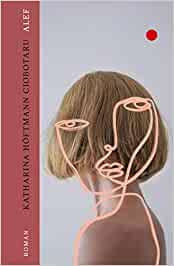
Book Review: Alef by Katharina Höftmann Ciobotaru


I was very curious about Alef by German-born, Israel-relocated Katharina Höftmann Ciobotaru, as, based on the book descriptions. I feel for a long time that the German- - as well as Hebrew- - speaking literary realm is missing stories reflecting a reality my generation is experiencing: the relationships between young German and Israeli, both on generally human, but also very personal level. Given the complicated historical background, such interactions, particularly the ones involving relationships and love, could offer a very interesting source of literary creativity. Plus, it reflects an enfolding reality both in Israel and Germany for over a decade.

Maja, a 21-year old German from Rostock, meets during a backpacking trip Eitan, a decade older Israeli. The womanizer with a mixed Iraqi and Romanian heritage is falling in love and they start writing their own love story. First, long-distance, after he joins her in Berlin, feels unhappy and following a 6-year break-up, she moves to Israel. His grandparents are Shoah survivors, her relatives do have open Neo-Nazi allegiances and who knows what her granpa did during WWII. She takes a giur  (conversion) classes, after many hesitations, and after some personal hardship in accepting religion she is becoming Rivka and is supposed to give birth to a Jewish child to her husband.

Alef is both a love story and a story of belonging. What one may expect from such topics. Sometimes it may be exactly like this in real life. The love story in itself, the idea of two random people from two remote corners of the world meeting and falling in love is beautiful and this is what alef - beginning, the first letter of the Hebrew alphabet - can be all about. The poetic ending of it - Höftman Ciobotaru is also a poet - was for me one of the best parts of the story. The fact that love - in any kind of story, but especially a German-Israeli one - comes with a heavy historical burden is also properly represented in the book.

However, there are some aspects that did not impress me greatly. For instance, the fact that 48 hours after their meeting, Eitan is asking Maja to convert really made me laugh very hard. Seriously, who will ever do this, especially an Israeli hanging around in India? It sounds so cliché that practically made for me the rest of the story largely and annoyingly unlikely. In general, I´ve found all the part regarding Eitan´s observance as well as Maja´s encounter with Gd largely unrelatable and too much cliché, although I am sure it relates to some of the German readers with an experience of a certain extent. However, it would have been so much place for a more ´natural´ approach, especially because being and becoming Jewish can happen in so many beautiful and non/anti-stereotypical ways. 

Another details that did not satisfy my literary tastes at all were related to the projections of the characters´ encounters. For example, when the focus is on one cast of characters and assumed that the other cast may have a certain involvement as well. It makes everything so predictable, although one may already expect that a love story happens anyway. 

The fact that diferent part of the story are in a complex way developed but without ever coming together it is a minus as well, as it would have make the story even more complex and relatable. 

Alef adds testimonies to the German-Israeli collection of common stories, in a similar vein with Mirna Funk´s books. Still, there is so much yet to be told, maybe in a more natural, Israeli-relaxed kind of way. Looking forward to more such books though.

Rating: 3 stars