Showing posts with label jewish travel Europe. Show all posts

Wednesday, 28 December 2016

Traces of Jewish life in Naumburg (Saale), Germany

A picturesque city, with many colourful houses spread around the old city area, Naumburg (Saale) also used to host a small Jewish community, first historically recognized in 1350. 
Close to the central square - markt - the Jewish street - Jüdengasse - was partially rebuilt in the last years and nowadays is part of the usual touristic tours regularly offered to the tourists from all over Germany visiting what is considered one of the most beautiful cities in the center of the country.
Nowadays, there is no significant Jewish presence in Naumburg (Saale) the former Jewish history being remembered by two memorial inscriptions: one in the memory of a pogrom that took place in 1494 and the other to remember the Jews killed during Shoah. 
In 1440, the archives mention the presence of 22 Jews in Naumburg (Saale). Unfortunately, even there was a small number, they were considered threatening enough by Elector Johann Friedrich who ordered their dispersion. The synagogue and the ritual bath - mikwaot - were destroyed. 
After the incident, in the last centuries, the Jews came and go, without establishing a constant high number presence. The few that were living here between 1933-1945 were killed in Shoah.
This stone representation of the 1494 events, on one of the walls of the Jüdengasse is an episode that went on repeat very often in Europe, in Germany and abroad. Innocent people that only wanted to live their life, were forced to leave in the middle of the night, with children and leaving everything behind. When were lucky enough to be able to run. Now, there is a state where Jews can go and live, but apparently, this is not good either, because, it seems, this fight and hate is never ending. 

Tuesday, 20 May 2014

Jewish Memories: Gleis 17 Berlin

I visited the Gleis 17 from the Berlin Grunewald station the last August. It was a very sunny beautiful day and the noble houses from the area were breathing a majestic peace. The station was first opened in 1879 and bore different names till the current one. The entrance has the shape of a castle and was finished in 1899. 
Various arrows and historical references are leading the visitor to the Gleis/Platform 17, one of the many stations from the Berlin network where the trains are coming and going every 15 minutes almost. It was a certain ambiance of normality that I'm afraid to think it used to be during the terrible times too. Some were taking the train to Berlin, others to death.
From 18 October 1941 till beginning of March 1945, from this station left 183 trains with Jews deported to, first, Litzmannstadt and Warsaw and from 1942 on, to Auschwitz and Theresienstadt. The number of the victims that went through this station is of around 55,000 persons. 
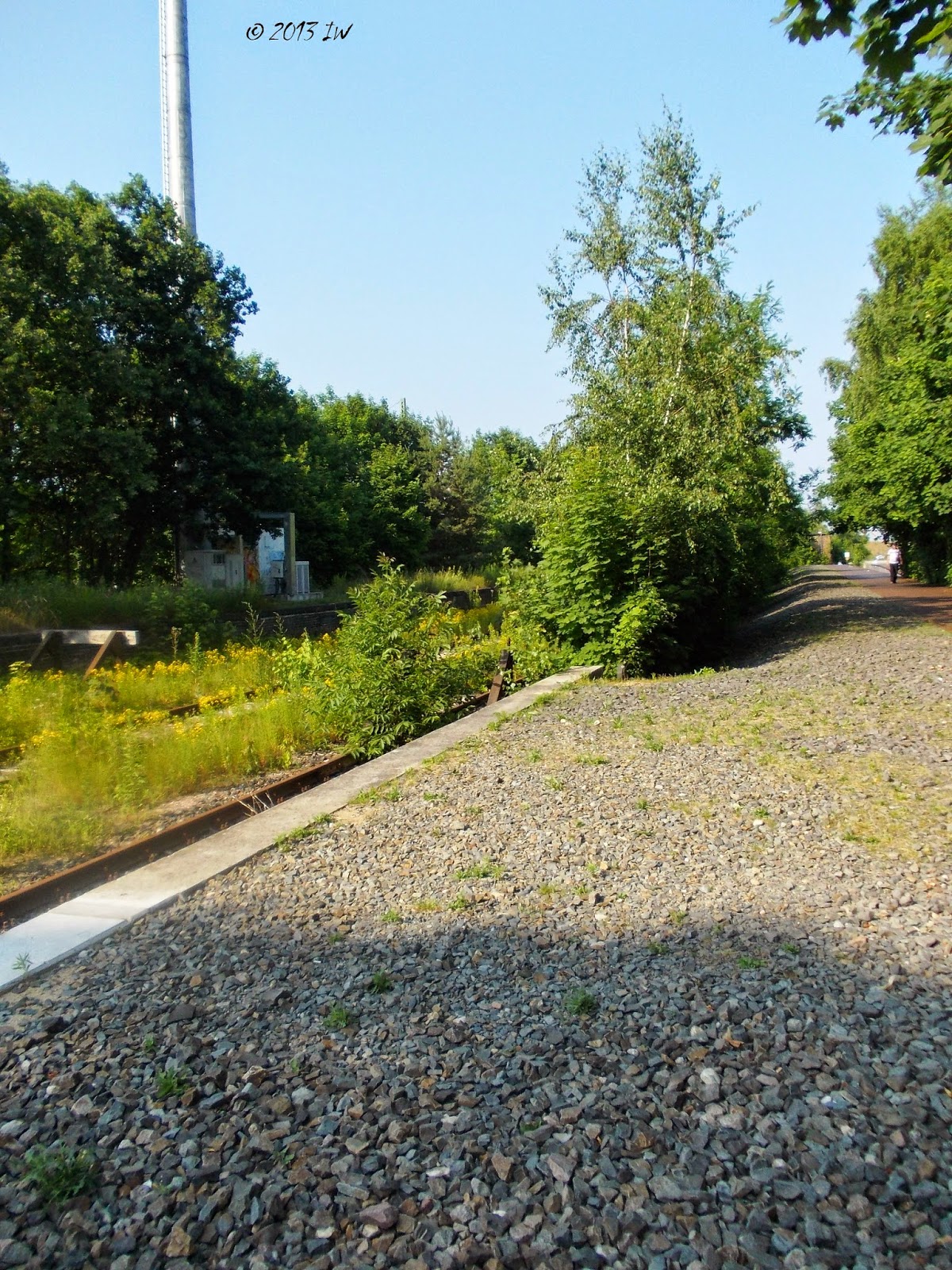
Nowadays, the line is not used being changed into a memorial in the memory of the person deported with the Deutsche Reichsbahn. The inheritors of the then German rail company, Deutsche Bahn, contributed to the establishment of a memorial officially inaugurated on 27 January 1998. At this date the Auschwitz and Birkenau concentration camps were liberated. 
The platform is separated into 183 steel plates, with details of the trains that left the station. It includes the date, the destination and the number of deportees. 
Stones in the memory of the victims, according to the Jewish tradition, are set on various places near the platform. Regularly, reunions in the memory of the victims are held, and most Israeli delegations visiting Berlin include Gleis 17 as part of their program. 
Remembrance has an important role in the Jewish tradition. The victims should be remembered individually and their name kept in the book of life. 
I spent there probably more than one hour, walking slowly and quietly the platform, putting one stone in one corner. No one around, only my silent steps on the steel. There is a lot of sadness and depressive feeling about the human condition. But there is also hatikva/hope, that such atrocities are not possible nowadays as we do have our state to protect and safe us from all evils.